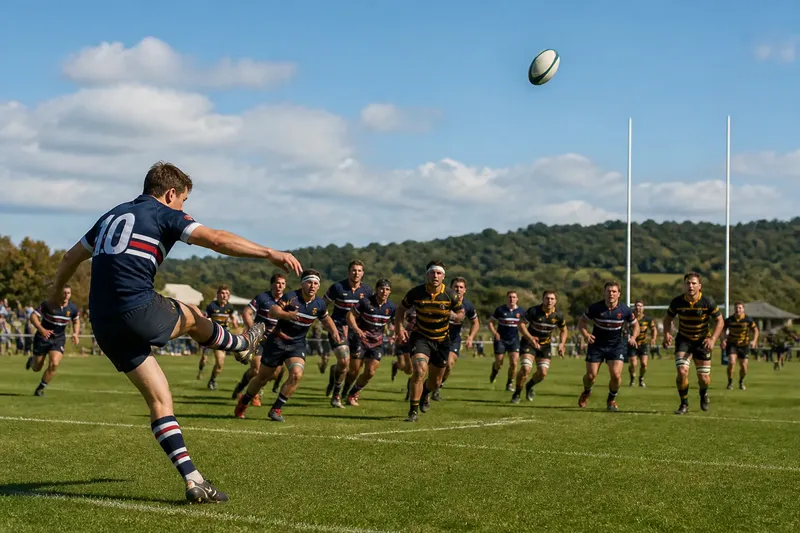
Why the Number on a Rugby Shirt Is Not the Whole Job
Rugby shirt numbers suggest familiar positions, but context matters: learn how to read a player’s real responsibilities across teams and formats.
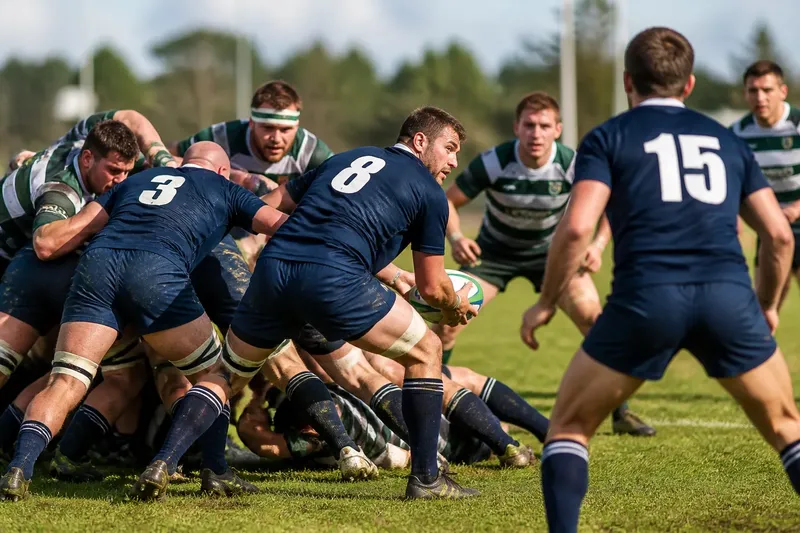
A rugby shirt number offers a useful clue, not a complete job description. In traditional fifteen-a-side rugby union, numbers became shorthand for positions: the two props wear one and three, while the full-back wears fifteen. That convention helps spectators recognise a starting shape, but it cannot tell you everything a player must do once the match begins.
How numbers became shorthand
As teams adopted more settled formations, shirt numbers helped distinguish players and made it easier to associate a place in the side with a familiar role. In union, the sequence from one to fifteen still gives a rough map: the front row, the rest of the forwards, then the backs. A number can therefore suggest where a player is likely to start and which parts of the game may be central to their role.
That map is most useful before kick-off, when the team sheet and formation are visible. It is less reliable as a description of every action. A prop may carry the ball in open play; a back may join a breakdown; and a forward may handle a pass that sends a team towards the try line. The number names a conventional position, while the match keeps changing the immediate task.
Start with the format
If you are watching fifteen-a-side union, treat the number as a position label within a familiar structure. The front-row numbers point to players with scrum duties; numbers in the back row suggest roles around contact and movement; and the backs are generally arranged to handle space and passing. These are useful expectations, not promises that each player will perform only one kind of work.
If you are watching rugby league, do not transfer the union map without checking the league’s conventions. League shirts commonly use numbers to identify positions too, but the positional arrangement and terminology differ. The same number can therefore prompt a different expectation depending on the code. In sevens, teams field fewer players, and a number alone is an even thinner guide to the work required across the match.
For a youth, school or social side, begin with the competition’s own team list and the way the coach has arranged the players. Shirt numbering may follow the familiar convention, but squad choices, substitutions and local practice can affect what a player is asked to do. If the number and the apparent role seem mismatched, the player may still be in the position assigned for that match.
Read the player’s task
To understand a player’s responsibilities, look at what is happening around them. At a scrum, the front row has a clear role in the set piece. After the ball is released, those same players may need to support a carrier, contest possession or move into the defensive line. The number gives context; the phase of play reveals the task in front of them.
Position also shapes choices without fixing them. A fly-half may often organise attacks and make decisions about passing or kicking, while a lock may be expected to contribute at line-outs and in close contact. But teams adapt their patterns to their players, the opposition and the state of the game. It is more accurate to say that a position creates recurring responsibilities than to treat it as a list of exclusive duties.
Say you are watching a union match and see number eight carry the ball from the base of a scrum. That fits a familiar role. If the same player later passes wide, supports a tackle or joins a line-out, those actions do not contradict the number; they show how a player’s work shifts with the team’s needs.
Which reading fits your situation?
What does a number tell me before kick-off?
It gives a starting point for identifying a conventional position, especially in a standard fifteen-a-side union side. Use the team sheet or programme to confirm the player’s listed position rather than assuming the number says everything.
Why is a player wearing an unexpected number?
The team may use a different numbering arrangement, or the player may have been assigned a role that does not match the familiar sequence. Check the match list and formation first; the number need not indicate an error.
Does the same number mean the same role in every format?
No. Union, league and sevens differ in their player numbers, positions and patterns of play. Identify the format before interpreting the shirt, then read the number within that code’s conventions.
How can I tell what a player is responsible for now?
Watch the phase and the player’s place in the team’s shape. A player near a scrum, line-out, breakdown or open attacking line may have different immediate work, even if their underlying position stays the same.
What is not worth decoding
It is not worth trying to infer a player’s entire skill set from a shirt number or memorising a rigid rule for every moment. That effort can obscure the more useful distinction between a player’s usual position and their current assignment. Focus on the formation, the phase and the way teammates respond to one another.
When the number is unfamiliar, or the side uses a local arrangement, a team sheet is a better guide than guesswork. In most matches, a broad positional clue is enough to follow the action; you can refine it by watching where the player lines up and what the team asks them to do next.
Rugby shirt numbers remain helpful because they make a team easier to read at a glance. Their limits are just as useful: they remind you to look beyond the back of the shirt. To understand a player’s responsibilities, start with the number, then let the format, formation and phase explain the rest.